
Oil and Gas Website Design & Development Services
Building Digital Excellence for the Energy Sector
The oil and gas industry operates in a complex environment defined by technical sophistication, regulatory scrutiny, safety imperatives, and global operations. These unique characteristics demand digital solutions that generic web design agencies simply cannot provide . Your website must communicate effectively with investors, regulatory bodies, local communities, potential employees, business partners, and environmental advocates—each with different information needs and expectations .
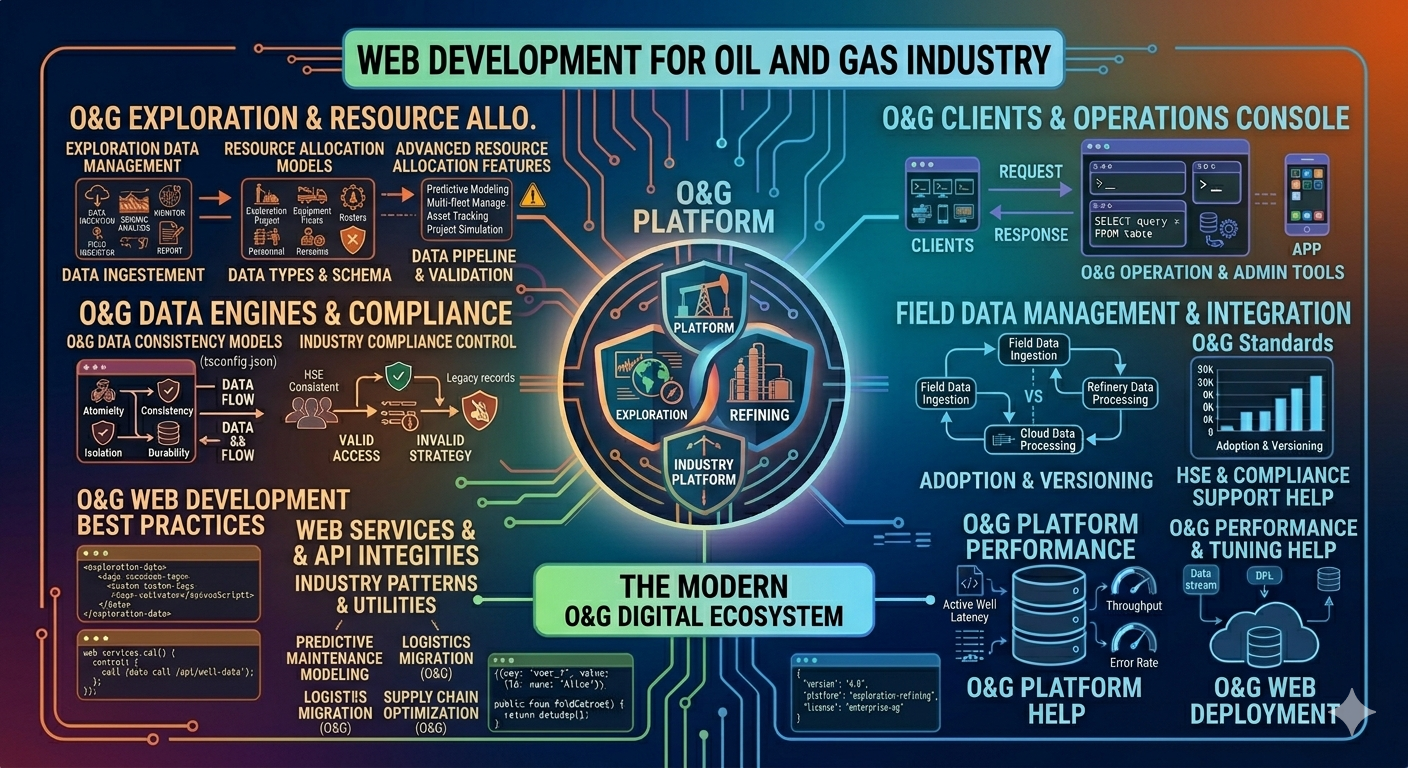
The energy sector faces unique digital challenges. You are dealing with high-value transactions, global supply chains, and the absolute need for trust . A website that effectively serves all stakeholders requires strategic planning and industry expertise that goes far beyond aesthetic design considerations.
Why Industry Specialization Matters
Generic web design agencies approach every project with similar templates and processes, regardless of industry context. While this might suffice for simple business websites, the oil and gas sector's complexity demands deeper understanding . Effective energy sector websites require knowledge of industry terminology, operational processes, regulatory requirements, and stakeholder expectations.
Industry-specialized agencies understand that oil and gas websites must balance technical credibility with accessibility . Content must satisfy engineers and geologists seeking detailed technical information while remaining comprehensible to investors and community members without technical backgrounds. This balance requires thoughtful information architecture and content strategy.
Corporate websites in this sector must reflect what the company stands for, why its products or services are worthwhile, and how it feels to do business with the organization . This emotional dimension is critical—websites should showcase employees as the heroes that move the company forward while highlighting environmental and social responsibility commitments .
Key Features of High-Performing Oil and Gas Websites
Investor Relations Portals
Investor relations functionality ranks among the most critical features for publicly traded energy companies. Websites must provide easy access to financial reports, SEC filings, stock information, and corporate governance documents . Comprehensive investor portals that meet regulatory requirements while delivering excellent user experiences are essential .
Safety and Environmental Commitments
Safety and environmental commitment sections demonstrate corporate responsibility—increasingly important as public scrutiny of the energy industry intensifies . These sections should feature measurable metrics, certifications, incident reporting, and sustainability initiatives. Visual presentations of safety data and environmental performance build credibility with stakeholders concerned about corporate responsibility .
Career Portals
Career portals for oil and gas companies must appeal to highly skilled professionals while conveying company culture and growth opportunities . The competition for talented engineers, geologists, and skilled trades workers is fierce—your careers section often provides candidates' first impression of your organization as an employer .
Technical Content Management
Complex petroleum content must be simplified without losing technical accuracy . Interactive elements such as infographics, dynamic charts, and real-time data visualizations effectively display key metrics like production statistics and operational impact . D3.js and similar visualization libraries enable sophisticated data presentation that engages users while making complex information accessible .
Global Accessibility
Oil and gas companies often operate globally, requiring websites that function effectively across different regions, languages, and network conditions. Multi-language support, CDN distribution, and performance optimization ensure accessibility for stakeholders worldwide . Operations in remote locations may involve users with limited bandwidth, making page load optimization especially important .
Essential Pages and Content Structure
A professional oil and gas website should include these core pages :
Homepage – A sleek, modern layout featuring the company's services, values, and key projects with clear navigation paths for different audience types.
About Us – Highlight the company's history, vision, leadership team, and core values. This section builds credibility and tells your corporate story.
Services – Detailed descriptions of services like exploration, drilling, refining, and distribution. Content must be technically accurate yet accessible to non-experts.
Projects – Showcase previous and ongoing projects with photos, descriptions, and measurable outcomes. Case studies demonstrate capability and build trust.
News and Insights – Provide industry updates, insights, and company announcements. Thoughtful content curation positions your organization as an industry leader.
Careers – Post job openings, career opportunities, and company benefits. Showcase workplace culture to attract top talent.
Contact – Include a map, contact form, and multiple contact methods. Easy access to your team facilitates business development.
Design Aesthetics and Visual Identity
Visual design for oil and gas companies typically emphasizes professionalism, technical competence, and stability . Bold imagery showcasing operations, technology, and people creates visual interest while reinforcing industry presence. However, design choices must remain appropriate for serious corporate communications—trends and flashiness rarely suit this sector .
Color Palette
Use colors that resonate with the petroleum industry such as deep blues, grays, and accents of orange or red . These colors communicate professionalism, stability, and energy while maintaining a serious, credible tone.
Typography and Imagery
Use bold and readable fonts that reflect professionalism . Incorporate high-quality images of oil rigs, refineries, pipelines, and your team at work. Authentic, high-resolution imagery builds trust and showcases operational capability.
Interactive Elements
Interactive modules that prompt user engagement and navigation have proven highly effective . Companies using interactive designs have achieved 30% increases in session duration and 25% reductions in bounce rates, with users appreciating streamlined navigation and clear presentation of complex data .
Mobile-First Responsiveness
Mobile responsiveness is essential as stakeholders increasingly access corporate information from smartphones and tablets . Whether an investor checking stock performance, a journalist researching a story, or a job candidate exploring opportunities, mobile users deserve fully functional experiences .
Technical Requirements and Capabilities
Performance and Speed
Website speed is critical for user experience and search engine optimization. Implement caching solutions like WP Super Cache or W3 Total Cache to improve loading speeds . For global audiences, CDN distribution ensures fast access regardless of geographic location .
Security
Security considerations are heightened for energy companies that may be targets for cyberattacks . Robust security measures protect sensitive corporate information and prevent website defacement that could embarrass the organization or spread misinformation. Use security plugins like Wordfence or Sucuri to protect the website . Ongoing security monitoring and rapid response to threats are essential .
System Integrations
Integration with corporate systems allows websites to display real-time information from operational databases, financial systems, and HR platforms . Whether showing current production statistics, stock prices, or job openings, these integrations keep content fresh and reduce manual update requirements .
SEO and AI Optimization
Modern oil and gas websites must be optimized for both traditional search engines and AI-powered platforms. Structured data, semantic content, and conversion-focused design help increase visibility, authority, and lead generation . Generative Engine Optimization (GEO) and Answer Engine Optimization (AEO) are emerging as critical strategies for visibility on platforms like ChatGPT, Gemini, and other AI-driven search tools .
Case Study: Real-World Impact
A leading upstream petroleum company recently underwent a complete website redesign with remarkable results . The challenges included:
- Simplifying complex petroleum content while maintaining technical accuracy
- Ensuring full responsiveness across all devices
- Highlighting sustainability efforts without overwhelming users
- Integrating real-time data visualizations for key metrics
The solution implemented a mobile-first design with intuitive navigation and interactive elements including infographics and dynamic charts . The design focused on eco-friendly aesthetics and used D3.js for interactive data visualizations .
Results: The website saw a 30% increase in session duration and a 25% reduction in bounce rates, especially on mobile. Users appreciated the streamlined navigation and clear presentation of complex data, improving brand perception and engagement .
Content Strategy That Builds Trust
Effective content strategy for energy companies balances corporate messaging with transparency and authenticity . Overly promotional content rings hollow when stakeholders seek genuine information about operations, safety records, and environmental impacts. The best oil and gas websites provide substantive information that builds trust through openness .
Technical content including project descriptions, asset information, and operational capabilities demonstrates expertise while serving business development purposes . This content should be sufficiently detailed to satisfy industry professionals while including explanatory elements for non-technical readers .
News and press release sections keep stakeholders informed about developments, but thoughtful curation matters . Burying negative news destroys credibility; addressing challenges directly and explaining responsive actions builds trust. Content strategies that balance promotional goals with transparency requirements are essential .
Regulatory Compliance and Disclosure
Publicly traded oil and gas companies face extensive disclosure requirements that affect website content . SEC regulations, stock exchange rules, and industry-specific requirements dictate certain disclosures and their accessibility. Websites must be designed to accommodate these requirements while maintaining usability .
Environmental disclosures increasingly demand attention as sustainability reporting standards evolve. Many companies now publish detailed ESG (Environmental, Social, Governance) reports that require dedicated website sections. Designing these sections for both current stakeholder access and historical archiving requires careful planning .
Crisis Communication Capabilities
The oil and gas industry faces potential crises including operational incidents, market disruptions, and environmental events. Websites must be capable of rapid updates to address emerging situations, providing stakeholders with timely, accurate information .
Having crisis communication templates and procedures ready enables swift response when needed . Dark site capabilities—pre-built alternative website versions activated during crises—ensure communication continuity even if primary sites experience issues .
Our Approach to Oil and Gas Web Development
We understand that oil and gas websites must be more than visually appealing—they must handle the complexity of global trade, compliance, and logistics . Our approach combines:
Strategic Discovery – Thorough analysis of your marketing and business strategy, organization, competitors, and customers . We understand your stakeholder landscape and communication priorities.
UX Prototyping – Detailed website mockups with all functional features and content blocks before visual design work begins . This ensures alignment on functionality and user experience early in the process.
Industry-Specific Design – Visual design that reflects technical competence, professionalism, and stability while incorporating interactive elements that engage users .
Technical Excellence – Robust security, performance optimization, system integrations, and SEO/AI-ready architecture .
Ongoing Support – Continuous maintenance, security updates, and content refreshes to keep your website performing optimally .
Conclusion: Investing in Digital Excellence
In an industry facing public scrutiny, competitive pressure, and rapid change, digital presence matters more than ever . An effective website strengthens stakeholder relationships, supports business development, aids recruitment, and protects corporate reputation. The investment in specialized oil and gas web design pays dividends across multiple business dimensions .
Your website is not just a page—it is your brand's voice, your 24/7 representative, and often your first impression. Partner with a team that understands the unique demands of the energy sector and can deliver digital solutions that build trust, showcase expertise, and drive business growth.
Let's Start Your Digital Transformation
Ready to build an oil and gas website that reflects your industry leadership? Our team specializes in creating digital experiences that balance technical credibility with accessibility, security with performance, and professionalism with engagement. Contact us today to discuss your project and discover how we can help you achieve digital excellence.